

Applications
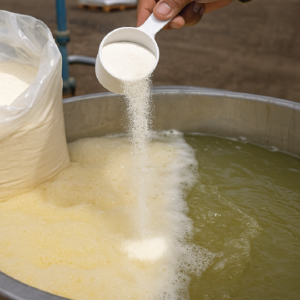
- Distillation of alcoholic beverages such as brandy, rum, tequila, and others.
- Industrial and food fermentations including sugarcane, wines, beer, and fermented juices.
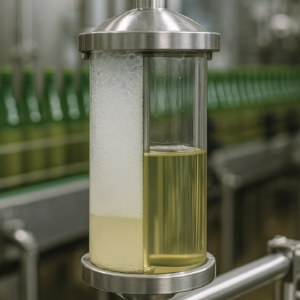
- Production of juices, nectars, and concentrates: prevents foam formation during filling operations.
- Manufacturing of jams and syrups: ensures uniform texture and process control.
- Confectionery and chocolate processing: maintains foam control during cooking and mixing stages.
- Dairy product manufacturing such as condensed milk, milk powder, dulce de leche, and similar products.
- Pharmaceutical processes including fermentations, emulsions, and suspensions: improves homogeneity.
- Cosmetic manufacturing such as shampoos, conditioners, gels, and lotions.
- Industrial chemical processes including distillation, reactions, and tank storage operations.
- Industrial cleaning systems: controls foam in equipment and washing circuits.
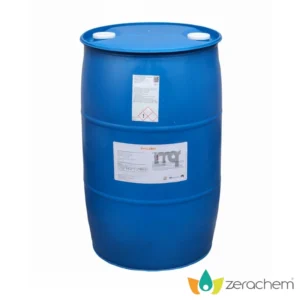
Description: Silicone Antifoam Agent Antifoamzera A30
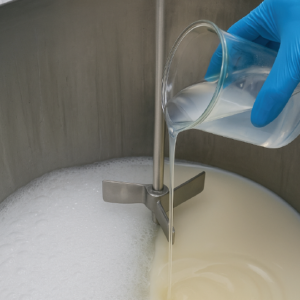
The silicone-based antifoam agent is a highly effective additive designed to control and eliminate foam across a wide range of industrial and food-related processes. Its formulation is based on silicone compounds, which provide superior physicochemical properties compared to conventional antifoam agents.
Its main characteristics include high efficiency, stability under severe temperature and pH conditions, and compatibility with a wide variety of aqueous and non-aqueous systems. One of its most important properties is its rapid action, as it works immediately upon contact with foaming media, reducing bubble formation and facilitating the release of entrained air. In addition, its long-lasting presence in the system prevents foam reformation over extended periods, making it ideal for continuous processes.
Its compatibility with multiple formulations allows it to be incorporated without affecting system stability. It is particularly effective in conditions where foam is persistent and difficult to break, such as in highly agitated systems, surfactant-rich environments, or high-temperature processes.
In the chemical industry, the silicone antifoam agent is used in processes such as distillation, fermentation, chemical reactions, and tank storage. It is also applied in industrial cleaning systems, improving operational efficiency and reducing risks of overflow or losses caused by foam accumulation.
In the food industry, it is used in the distillation of alcoholic beverages (brandy, tequila, rum), production of juices, nectars, concentrates, syrups, chocolate products, controlled fermentations, confectionery, and dairy products. Foam formation in these stages can cause losses due to overflow, cross-contamination, filling errors, and texture alterations. The antifoam helps preserve product quality and line hygiene, under regulatory frameworks that permit its controlled use in food applications.
In juice production, fruit concentrates, and jams, it prevents excessive foam buildup that could interfere with filling operations or final texture.
During the production of syrups, emulsions, suspensions, and fermentation processes in the pharmaceutical industry, its action prevents foam formation that could compromise dosing accuracy, homogeneity, and product stability.
In pharmaceutical fermentations, its use contributes to better control of culture volume and improves production efficiency of active ingredients. In the cosmetics industry, the silicone antifoam agent is used in formulations such as shampoos, conditioners, lotions, bath gels, and creams, preventing excessive foam during mixing and filling. This ensures stable textures and improves the final product appearance.