The Key Role of Antifoams and Defoamers in Industry

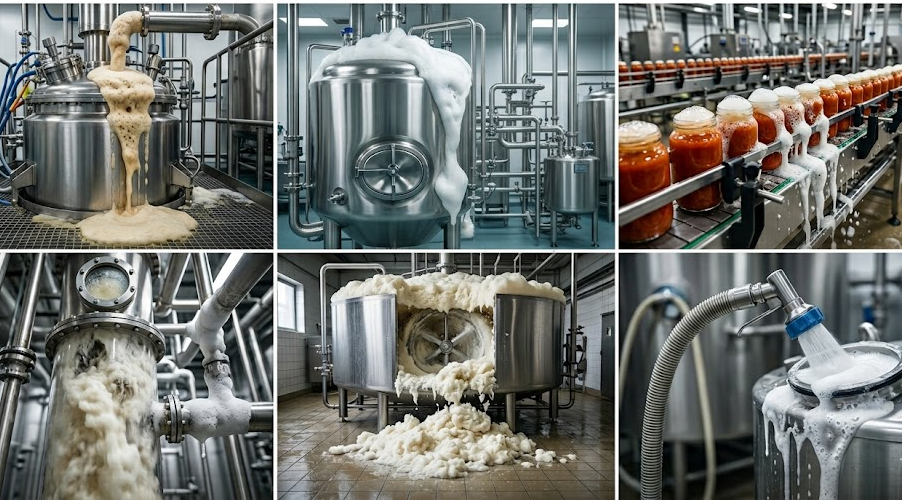
Anyone who has spent time in a industrial plant – whether formulating a pharmaceutical syrup or operating a fermentation system – has likely experienced the tension that arises when the level in a tank begins to increase without apparent explanation. Level sensors become unreliable, pressure gauges display erratic readings due to entrapped gas, and within seconds, a dense and persistent foam threatens to invade the vent system or cause an overflow. Foam remains one of the most common yet underestimated operational challenges in industrial processes.

The Key Role of Antifoams and Defoamers in Industry

This article explains how foam forms in industrial processes and how chemical strategies can be used to control it in industrial processes.

Why does foam form?

Before discussing foam control strategies, it is important to understand the mechanisms responsible for foam formation. Foam is fundamentally a dispersion of gas bubbles within a continuous liquid phase. Its stability depends on the presence of three essential components: a liquid phase, a gas phase, and a surfactant.

“When air is introduced into surfactant systems through intense mechanical agitation, such as mixing with propellers or pumping operations in dairy processing and fermentation, a significant amount of foam can rapidly form”

Surfactants are commonly encountered in both pharmaceutical and food manufacturing processes. These compounds may include proteins present in whey and fermentation broths, saponins derived from botanical extracts, or functional excipients added to stabilize an active ingredient.

Once present in the system, surfactants adsorb at the air, liquid interface, reducing surface tension and forming a flexible, resilient film around gas bubbles. This interfacial film inhibits bubble coalescence, thereby increasing foam stability and persistence.

“Foam formation is governed by fundamental physicochemical principles. At its core, foaming arises from intermolecular interactions, both covalent and non-covalent, as well as from topological fluctuations at the air–water interface”

Foam formation is not a spontaneous process. It requires a substantial input of mechanical energy to overcome interfacial tension, the force that naturally keeps a liquid surface stable and resistant to bubble formation.

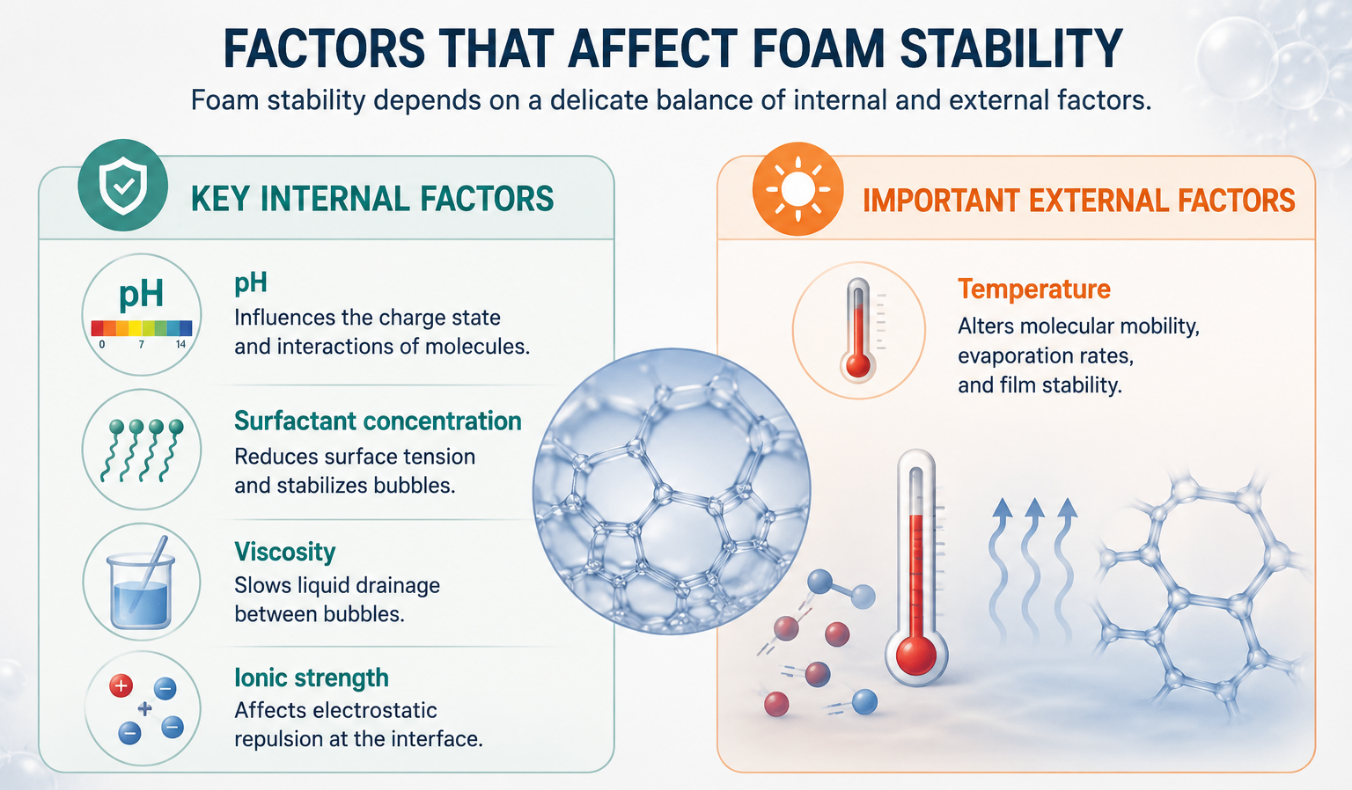
Once generated, foam stability depends on a delicate balance between several internal and external factors.1

The Key Role of Antifoams and Defoamers in Industry

Understanding these principles helps explain why some foams persist for hours while others collapse within seconds. The same physicochemical mechanisms are also central to applications in food processing, enhanced oil recovery, pharmaceuticals, and cosmetic formulations.

Antifoams or Defoamers?

Although the terms are often used interchangeably, there is an important technical distinction between an antifoam and a defoamer.

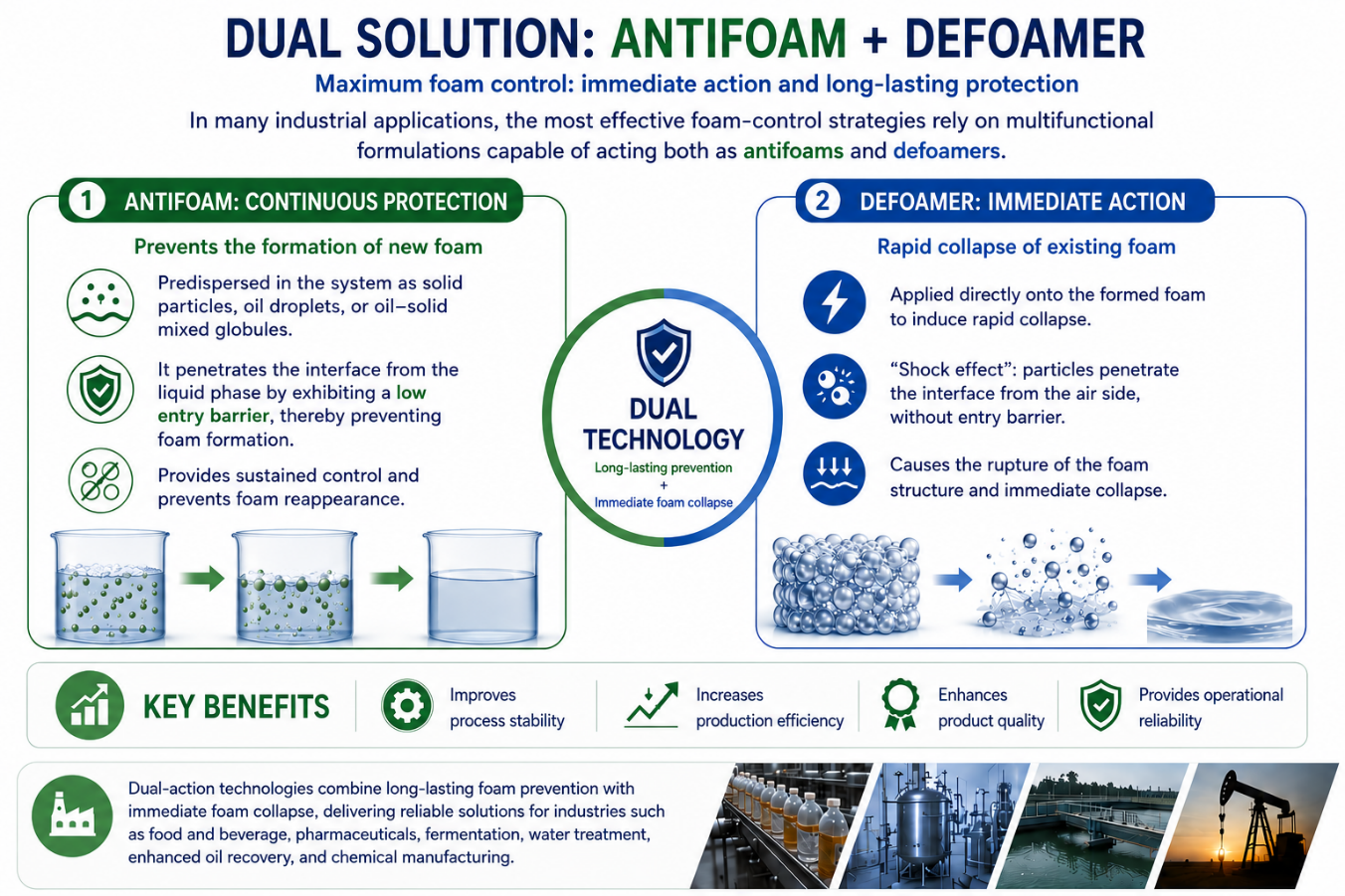
An antifoam is a substance pre-dispersed within a foaming system, typically in the form of solid particles, oil droplets, or mixed oil, solid globules, whose primary function is to prevent excessive foam formation. Its effectiveness depends strongly on the so-called entry barrier, which describes the difficulty encountered by antifoam particles when penetrating the air–water interface from the liquid phase.2

In contrast, a defoamer is applied directly to an already formed foam layer to induce rapid foam collapse, often referred to as a “shock effect.” Because defoamer particles approach the interface from the air side, they do not experience an entry barrier when penetrating the air–water interface.3

“Once the foam collapses, the defoamer becomes dispersed throughout the underlying liquid and effectively transitions into an antifoam system.”

The Key Role of Antifoams and Defoamers in Industry

In many industrial applications, the most effective foam-control strategies rely on multifunctional formulations capable of acting both as Antifoams and Defoamers. These advanced systems not only deliver rapid foam knockdown during critical process upsets but also provide long-term suppression by preventing foam from reforming.

Thus, Zerachem is a key ally for your business, delivering innovative solutions for any process where foam creates operational risks.

References

  • (1) Deotale, S. M.; Dutta, S.; Moses, J. A.; Anandharamakrishnan, C. Foaming and Defoaming–Concepts and Their Significance in Food and Allied Industries: A Review. Discover Chemical Engineering 2023 3:1 2023, 3 (1), 9-. https://doi.org/10.1007/s43938-023-00025-6.
  • (2) Denkov, N. D. Mechanisms of Foam Destruction by Oil-Based Antifoams. Langmuir 2004, 20 (22), 9463–9505. https://doi.org/10.1021/la049676o.
  • (3) Function Category 33: Defoamer. https://comptox.epa.gov/chemexpo/functional_use_category/33/ (accessed 2026-03-18).

Why Partner With Us

30 Years Focused on Chemical Excellence

Backed by quality certifications, reliable logistics, and a comprehensive chemical portfolio tailored to your industry.

We are the strategic partner for industries that require risk-free operational continuity.

KOSHER
Certified

Agile
Reformulation

Permanent
Stock

Full Regulatory
Compliance

Technical
Sustainability

Organized
Logistics

Specialized
Consulting

Free
Samples

PRODUCT SOLUTIONS

Get direct access to our specialty product line: antifoams, emulsions, degreasers, and more.

INDUSTRY SOLUTIONS

Explore the solutions we’ve already formulated to address the unique demands of your sector.

Let’s start your next project.

Let’s start your next project

Describe your needs and let’s put the plan into action: technical assessment, samples for your validation and approval, and full support to implement the raw material that best fits your requirements and process.

We’re ready!