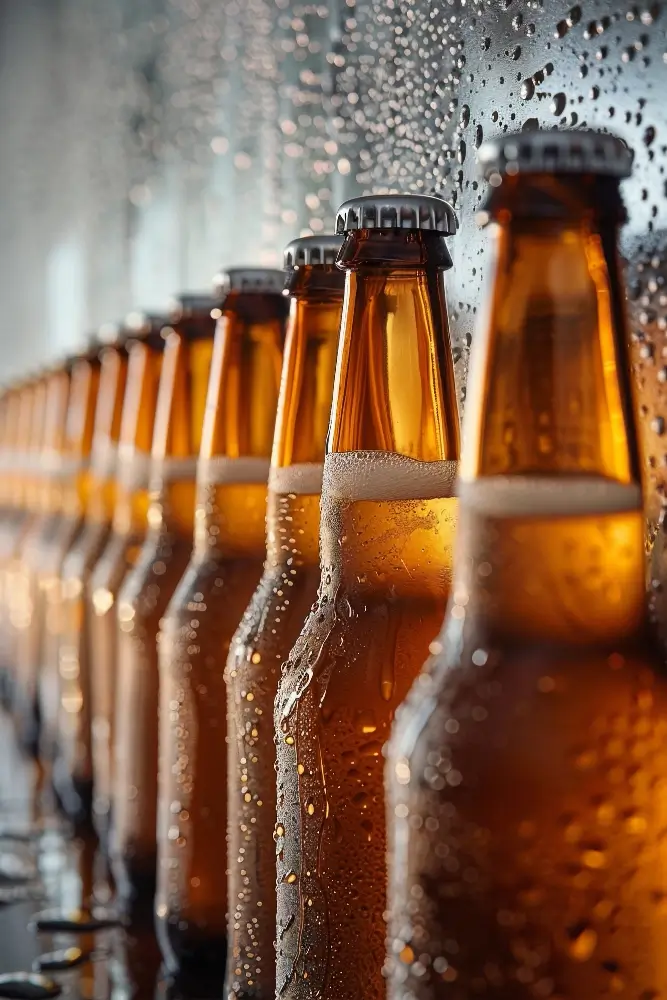
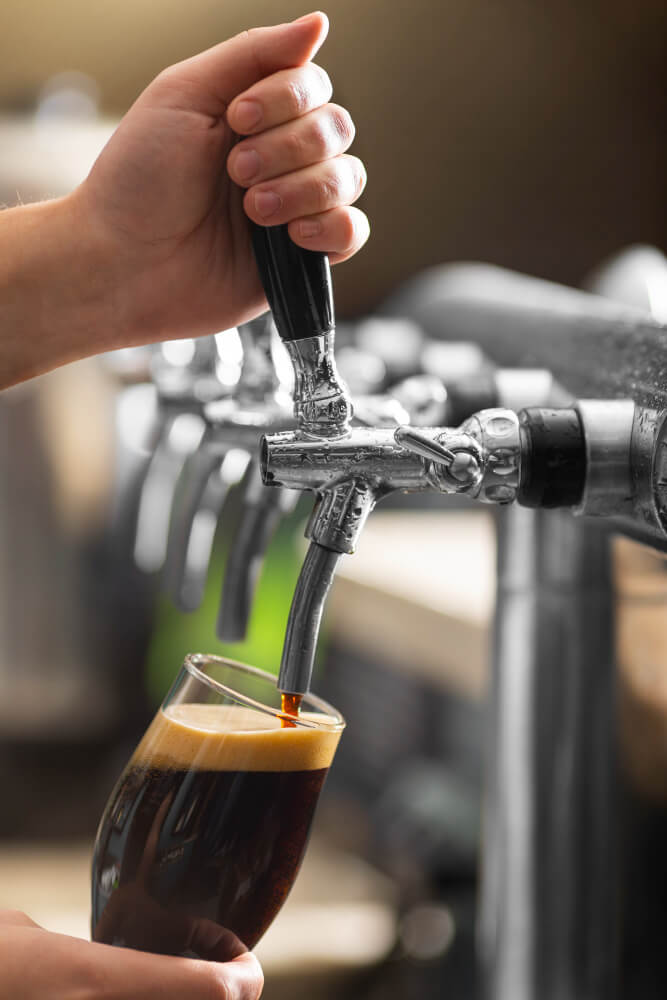
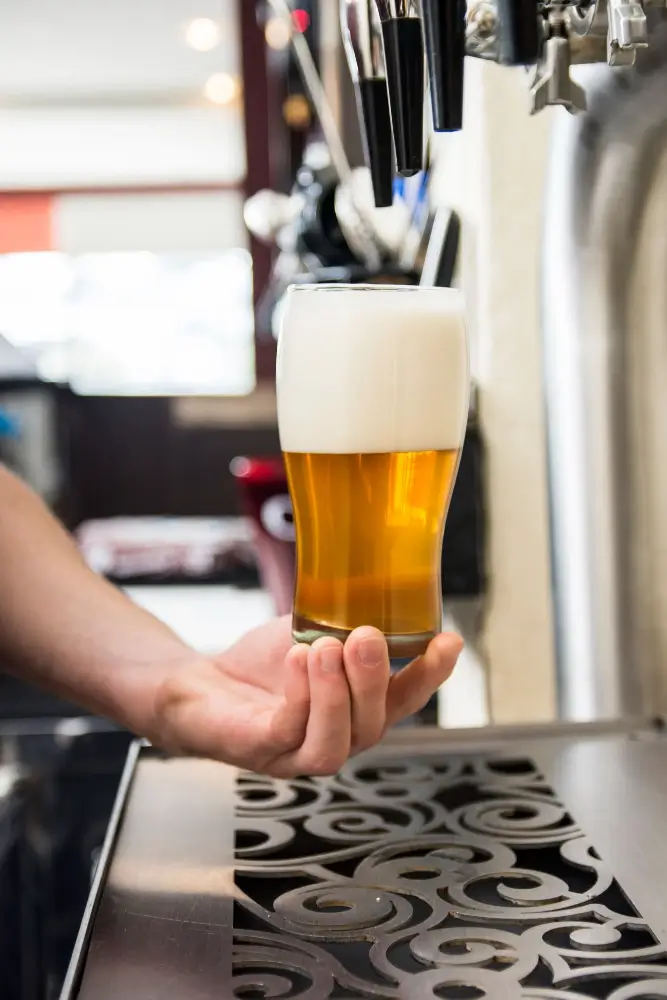
Let’s examine a specific case from the industry: During beer fermentation, yeast metabolizes wort sugars, producing ethanol and CO₂. As this gas bubbles through the liquid, it generates foam that becomes stabilized by naturally occurring surface-active compounds in the wort, primarily proteins, polypeptides, and fatty acids.
These amphiphilic molecules, which have affinity for both water and air, adsorb at the gas-liquid interface and form an elastic film around the bubbles, making them more stable and harder to break [1]. This can lead to several operational challenges:
Fortunately, the challenges described here can be effectively addressed. For instance, adding silicone-based antifoam to the fermentation medium reduces the liquid’s surface tension, destabilizing the foam film and causing bubbles to collapse—helping mitigate the issues outlined above [1].
Given the versatility of silicone-based antifoams across the brewing industry, ZeraChem is taking a closer look at this topic...
Across the broader food industry, silicone antifoams have become a versatile technical solution for a wide range of operational challenges, serving as essential processing aids in applications spanning from fermentation to packaging.
Understanding their nature and applications is essential for operations seeking to optimize performance while maintaining the highest food safety standards.
What Is a Silicone-based antifoam?
Silicone-based antifoam is a formulation specifically designed to prevent, control, and eliminate unwanted foam formation in aqueous media and industrial processes. Its active ingredient is polydimethylsiloxane (PDMS), an organosilicon polymer with unique physicochemical properties that make it one of the most effective antifoaming agents available for the food industry.
Silicone antifoams are typically supplied as oil-in-water (O/W) emulsions, where PDMS constitutes the dispersed phase and water serves as the continuous phase. This format supports easier handling, accurate dosing, and rapid dispersion in the aqueous systems where the product is applied.
Formulation Components
Active ingredient
Polydimethylsiloxane is a linear polymer with a backbone composed of silicon-oxygen bonds (-Si-O-Si-O-) and methyl groups (-CH₃) attached to silicon. Its molecular weight and viscosity can vary depending on the specific application, ranging from low-viscosity PDMS (100–1,000 cSt) for fast action to high-viscosity PDMS (10,000–100,000 cSt) for longer-lasting performance.
Performance enhancers
Many formulations incorporate silicon dioxide (silica) that has been surface-treated with organic groups—such as dimethylsilyl or trimethylsilyl groups—to increase its hydrophobicity. This hydrophobic silica acts as a synergistic enhancer, improving antifoam efficiency by facilitating "bridging" between bubbles and helping prevent PDMS from re-dispersing into the medium.
Food-grade emulsifiers
To achieve stable dispersion of PDMS in water, approved nonionic food-grade emulsifiers are used, such as sorbitan esters (sorbitan monostearate, E-491) or polysorbates (polysorbate 60, E-435, or polysorbate 80, E-433). These emulsifiers help maintain emulsion homogeneity throughout shelf life and support rapid PDMS dispersion when added to the foaming medium [2].
Aqueous carrier
Water forms the continuous phase of the emulsion and acts as the carrier for the active ingredient, simplifying dosing and application.
Foam in the brewing industry
A critical process challenge
In brewing operations, foam formation during fermentation represents a process challenge that can significantly affect production capacity, operational efficiency, and final product quality.
Foam control through antifoam technology
Effective foam control throughout fermentation enables higher tank fill volumes without overflow risk while helping reduce cleaning frequency and associated costs. This is where silicone antifoams play a key role: they reduce surface tension and destabilize foam lamellae, causing air bubbles to rupture and collapse.
Advantages and technical characteristics
Food-grade silicone emulsions offer a set of characteristics that make them particularly well suited for industrial applications of this type:
Storage stability
They generally maintain their properties over extended periods when stored under appropriate conditions.
Broad effective pH range
They perform effectively in systems with pH values from 3 or lower to levels above 7.
High-temperature efficacy
They maintain antifoaming performance even in processes that require heating.
Easy dilution in water
They disperse quickly in the medium under low-shear conditions.
Ready-to-use formats
Some products are formulated for direct use without prior dilution.
References
- [1] “Resumen de Aplicación del aceite de silicona en el proceso cervezero – Dialnet.” Accessed: Aug. 07, 2026. [Online]. Available: https://dialnet.unirioja.es/servlet/articulo?codigo=4855473&info=resumen
- [2] “What are emulsifiers and what are common examples used in food? | Eufic.” Accessed: Aug. 07, 2026. [Online]. Available: https://www.eufic.org/en/whats-in-food/article/what-are-emulsifiers-and-what-are-common-examples-used-in-food
Important Legal Notice
This blog and all content published herein are provided strictly for informational and educational purposes. The intent is to offer a general, didactic overview of food-grade antifoams and the industrial processes in which they are used. Under no circumstances does this content constitute technical advice or a product recommendation.
For any real-world application, it is essential to consult and strictly follow the product’s Technical Data Sheet (TDS) and Safety Data Sheet (SDS/MSDS), as provided by the manufacturer or authorized supplier. These documents contain purity specifications, storage conditions, recommended dosage levels, handling warnings, and use restrictions that must be followed without exception.
Why Partner With Us
30 Years Focused on Chemical Excellence
Backed by quality certifications, reliable logistics, and a comprehensive chemical portfolio tailored to your industry.
KOSHER
Certified
Agile
Reformulation
Permanent
Stock
Full Regulatory
Compliance
Technical
Sustainability
Organized
Logistics
Specialized
Consulting